Green Renovation in Singapore 2026: Eco-Friendly Materials and Energy-Saving Upgrades That Pay for Themselves
Sustainable renovation is no longer just about saving the planet. In Singapore’s high-utility-cost environment, green upgrades directly reduce your monthly bills. Here is a practical guide to eco-friendly renovation choices that make financial sense.
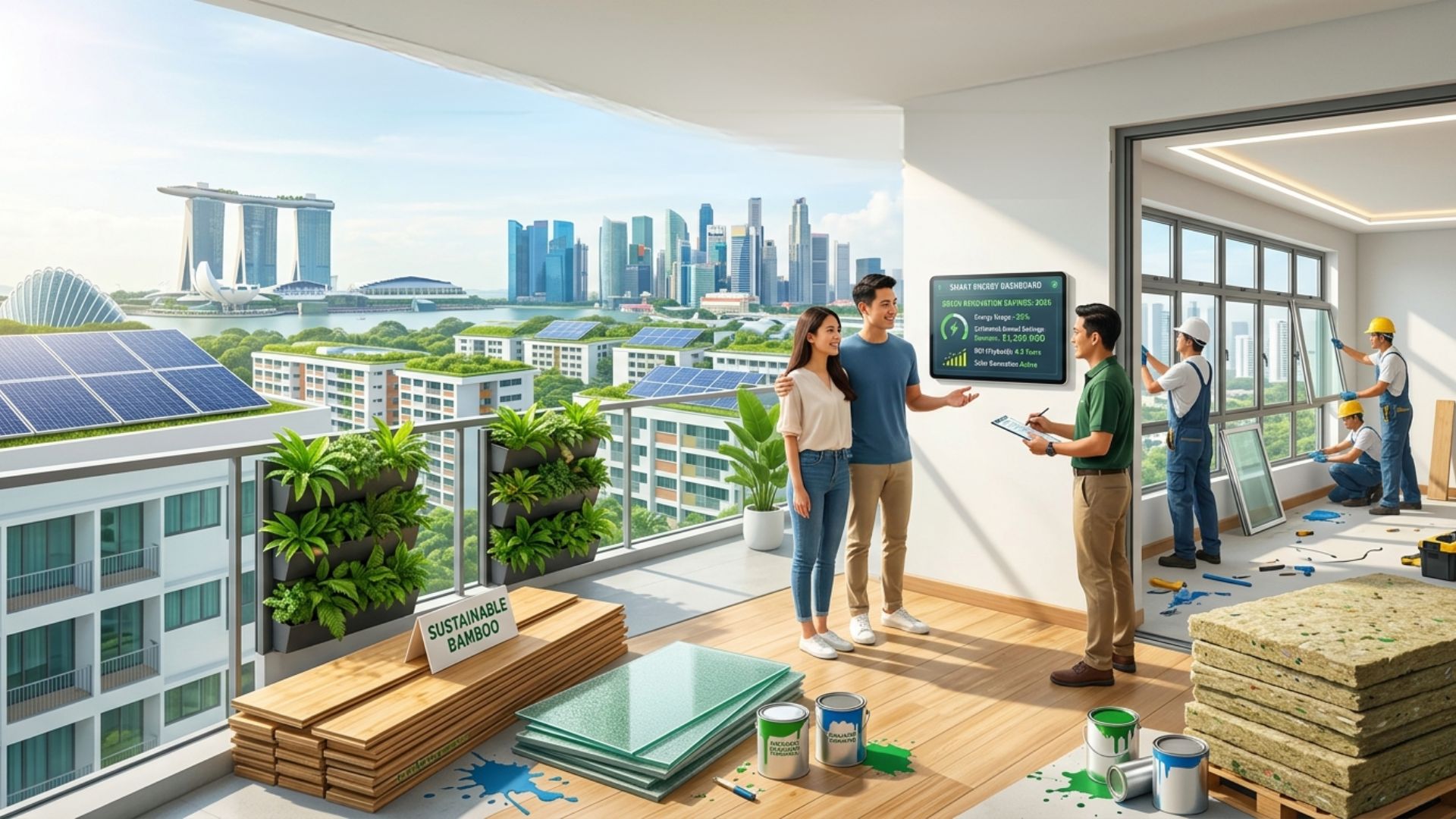
Energy-Saving Upgrades with the Best ROI LED Lighting Throughout (S$500 to S$1,500): If your renovation includes lighting, there is no reason to install anything other than LED. An LED downlight uses 8 to 12 watts compared to 50 watts for a halogen equivalent. For a 4-room flat with 30 light points, the annual electricity savings are S$200 to S$350. The upgrade pays for itself within two years. Inverter Aircon System (S$3,000 to S$6,000 for 3 to 4 units): Inverter air conditioners use 30 to 50 percent less energy than non-inverter models. With Singapore households spending S$150 to S$300 monthly on air conditioning, the savings are substantial. Look for 5-tick energy rating models from Daikin, Mitsubishi, or Panasonic. Cross-Ventilation Design (S$0 to S$1,000): Thoughtful layout planning that maximises natural airflow costs almost nothing during renovation but reduces reliance on air conditioning. Position bedroom doors opposite windows, use louvred doors for bathrooms, and avoid blocking corridor airflow with floor-to-ceiling carpentry. Eco-Friendly Material Choices FSC-certified plywood for carpentry costs 10 to 15 percent more than standard plywood but ensures responsible forestry practices. Low-VOC paints from Nippon or Dulux cost the same as standard paints but improve indoor air quality significantly. Bamboo flooring is a renewable alternative to hardwood at S$5 to S$12 per sqft, and it performs well in Singapore’s humidity. Water-Saving Fixtures PUB’s Water Efficiency Labelling Scheme (WELS) rates fixtures from 0 to 3 ticks. A 3-tick tap uses up to 35 percent less water than an unrated one. For a family of four, water-efficient fixtures save approximately S$100 to S$200 annually. Dual-flush toilets (S$200 to S$600) and flow-restricting shower heads (S$50 to S$150) are easy, cost-effective upgrades. Reno Research Tip: BCA’s Green Mark scheme recognises homes with sustainable features. While primarily for developers, individual homeowners can use its framework as a checklist for green renovation priorities. Go Green with Your Renovation → Match with eco-conscious designers on Reno Research who specialise in sustainable materials and energy-efficient design. Browse green renovation projects for inspiration.
Planning a renovation?
Get matched with vetted firms that fit your budget and style — free.
Get matched