The quiet power of the HDB feature wall
In a city where square footage is precious, one wall can carry the entire personality of a home — if you know how to use it.
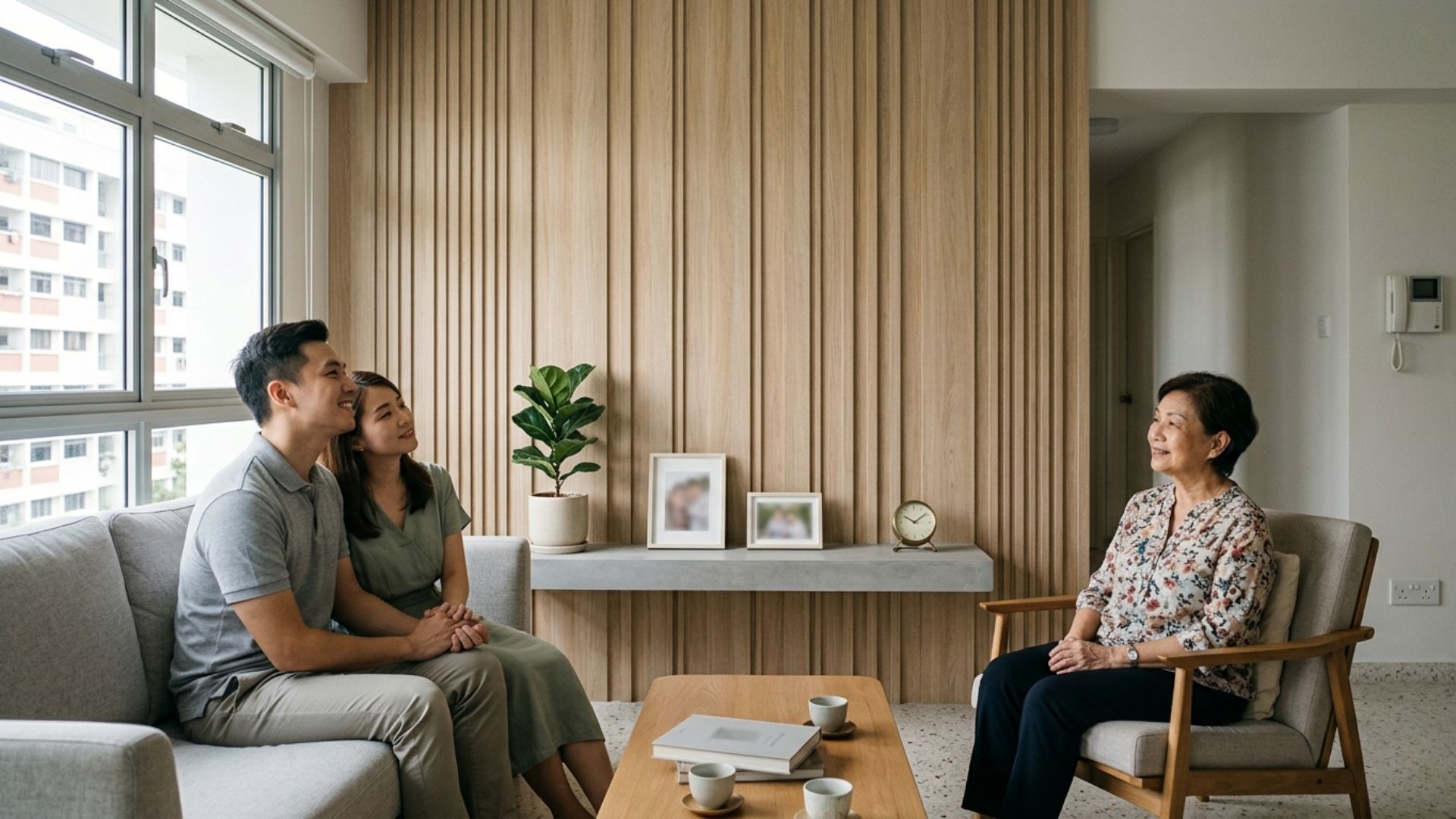
Walk into almost any recently renovated HDB flat in Singapore and you will find it: one wall that commands the room. It might be clad in warm limewash, wrapped in fluted timber panels, or simply painted in a shade deep enough to anchor everything around it. The feature wall has become the defining gesture of Singapore's contemporary interior moment — and for good reason. In most Singapore homes, space is non-negotiable. A three-room flat in Tampines or a four-room in Queenstown offers perhaps 90 to 110 square metres to work with. Every design decision must do double duty. Against this backdrop, the feature wall is not decoration — it is strategy. Why one wall works There is a well-established principle in visual composition that a single point of emphasis makes a space feel more considered than many competing elements. When every wall vies for attention, the eye has nowhere to rest. When one wall leads, the others become a quiet backdrop — and suddenly the room feels larger, calmer, and more deliberate than its square footage would suggest. This is particularly valuable in Singapore living rooms, where the sofa wall and the TV wall often face each other across a narrow span of four to five metres. Treating both walls equally creates visual compression. Elevating one — and keeping the other plain — introduces depth that the room does not physically possess. Choosing the right treatment Limewash and mineral paint have surged in popularity among Singapore homeowners over the past two years, and the appeal is understandable. Their soft, variegated finish absorbs light rather than reflecting it, which suits Singapore's intense tropical sunlight well. Unlike high-gloss or even standard eggshell paint, limewash walls do not produce the hot bright reflections that can make a west-facing HDB living room feel uncomfortable in the late afternoon. Fluted timber panels offer a different character — tactile, warm, and forgiving of the humidity that is part of Singapore life. Well-sealed engineered wood or MDF fluted panels maintain their form reliably in air-conditioned interiors, and their vertical lines naturally draw the eye upward, lending a sense of height to the typically 2.5-metre-ceiling HDB flat. For those who prefer plaster work, microcement and venetian plaster remain elegant choices, though they require skilled application. A poorly executed plaster wall is visibly uneven in Singapore's unforgiving natural light, so engaging an experienced contractor is essential. Colour in a tropical context Singapore's light is unlike the northern European light that inspires many of the earth-tone palettes circulating on design platforms. Our sky is bright white, our afternoons are high and direct, and our evenings arrive quickly. Colours that read as warm and enveloping in a London design magazine can appear washed out or unexpectedly saturated when rendered on a Bishan living room wall. We advise clients to sample three to four colours on the actual wall and observe them across the full arc of a day — morning, noon, late afternoon, and under artificial evening light. A terracotta that looks ideal at 9am may turn almost orange at 3pm. A dusty sage that appears muted in the paint sample may read distinctly green once scaled up to eight square metres.The wall and the furniture A feature wall earns its place when it is in genuine conversation with the furniture arranged before it. A warm-toned limewash wall paired with a pale linen sofa and natural rattan side table creates a cohesive material story. The same wall behind a dark grey velvet sofa and glass-topped coffee table will feel like a mismatch — not because either element is wrong, but because they are not speaking the same design language. Before committing to a treatment, we recommend laying out material samples — paint swatches, fabric swatches, and timber samples — together on a flat surface. The relationships between materials are as important as the materials themselves. A feature wall is never a solo performance. Knowing when to stop Perhaps the most common mistake homeowners make is not the feature wall itself, but what comes after it. Once one wall is elevated, there is a temptation to add more: a gallery arrangement, a floating shelf unit, a large-format framed print, decorative sconces, a console table with objects. Each addition is individually justified; collectively, they undo the quiet authority the wall was meant to provide. The feature wall works because it is singular. Treat what you place against it with the same restraint you would apply to a gallery — one piece, chosen with care, positioned with intention. The empty space around it is not a gap to be filled. It is part of the design.
Planning a renovation?
Get matched with vetted firms that fit your budget and style — free.
Get matched